- March 01, 2026
- AI & Automation
- 8 Min Read
AI Agents vs Traditional Chatbots: What Businesses Need in 2026.
Artificial intelligence is rapidly changing the way businesses communicate with customers and manage everyday operations. For years, traditional chatbots have helped organizations answer frequently asked questions and guide customers through predefined conversations.
In 2026, businesses are increasingly looking beyond simple question-and-answer systems. AI agents can understand context, work across connected business systems, perform multi-step tasks and support employees and customers throughout a complete workflow.
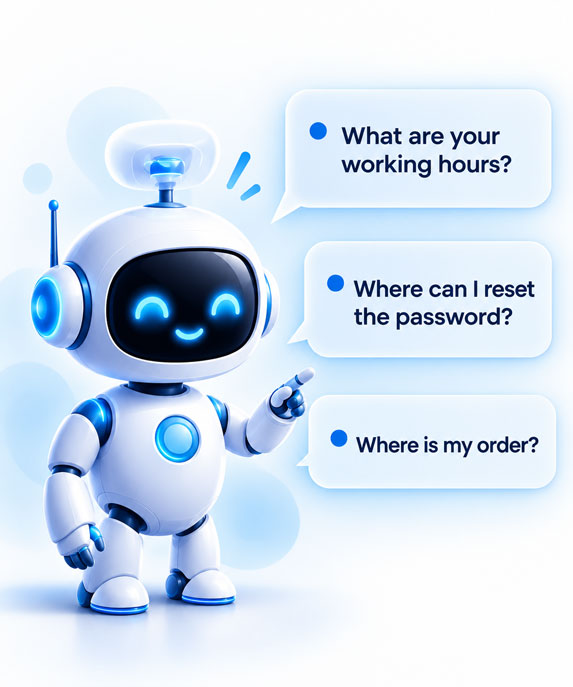
What Is a Traditional Chatbot?
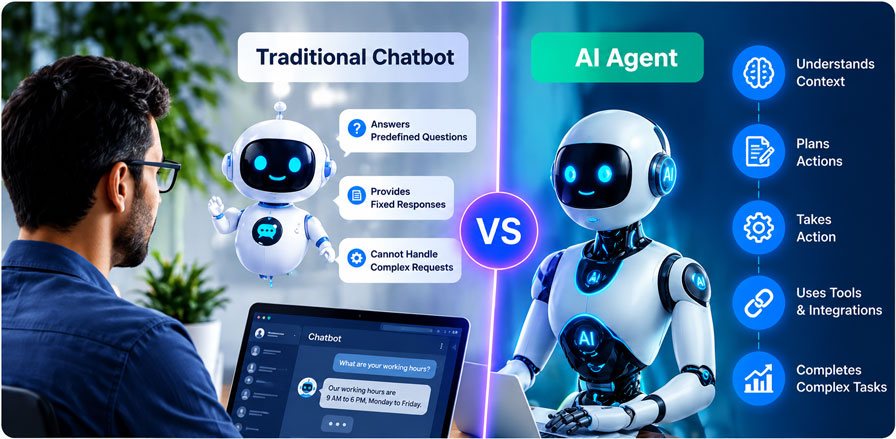
Traditional chatbots are designed primarily to handle structured conversations. They normally operate through predefined rules, scripted flows, frequently asked questions or a controlled knowledge base.
Where Traditional Chatbots Work Well
Chatbots remain useful for predictable customer interactions, FAQ handling, basic information delivery, lead capture and routing customers to the appropriate team.
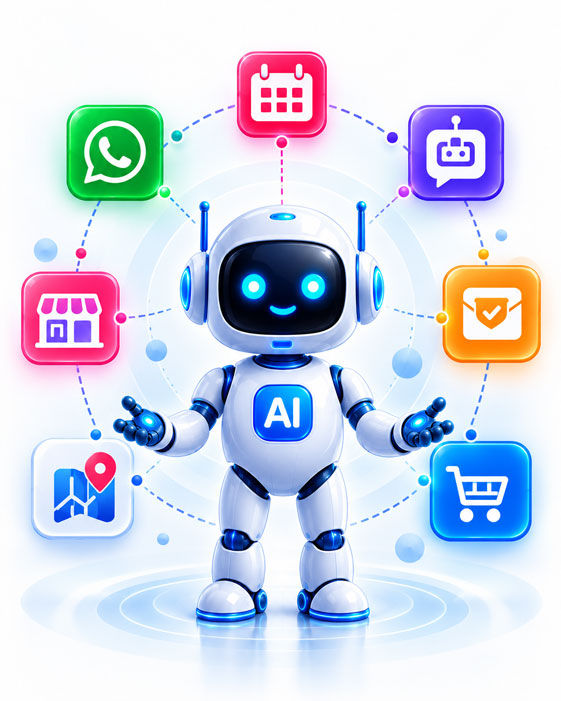
What Is an AI Agent?
An AI agent is designed to go beyond generating a response. Depending on its configuration and permissions, it can understand a business objective, plan a sequence of steps, use connected tools and perform approved actions.

The important shift is from simply answering questions to helping businesses complete useful work.
– Melintross Technologies
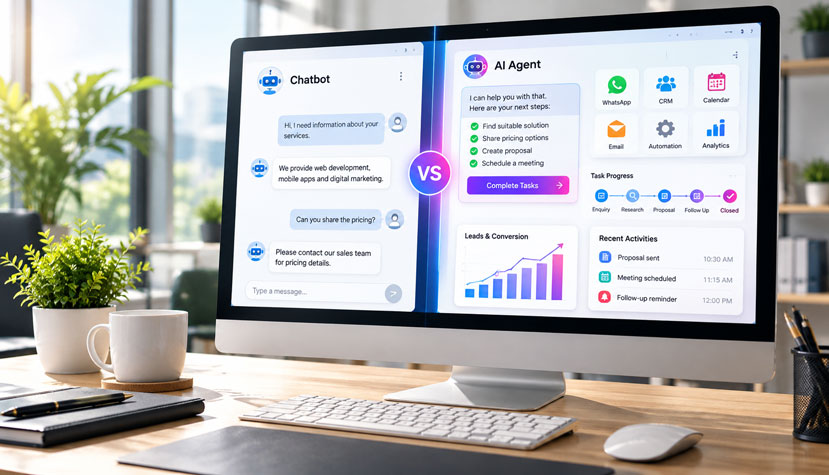
AI Agents vs Traditional Chatbots
The practical difference is not simply whether a system uses artificial intelligence. The more important question is what the system can do after understanding a customer's request.
| Feature | Traditional Chatbot | AI Agent |
|---|---|---|
| Primary Role | Conversation and information | Goal-oriented task execution |
| Understanding | Rules, intents or scripted flows | Context and natural-language reasoning |
| Workflow | Usually predefined | Can coordinate multiple steps |
| Tool Usage | Limited or predefined | Can use approved tools and APIs |
| Integration | Often limited | CRM, ERP, calendar and business systems |
| Actions | Mostly provides responses | Can perform approved actions |
Where AI Agents Can Support Businesses
Customer Support
Handle routine enquiries, retrieve information and escalate complex requests.
Sales & Lead Management
Qualify enquiries, update CRM records and coordinate follow-ups.
Appointments
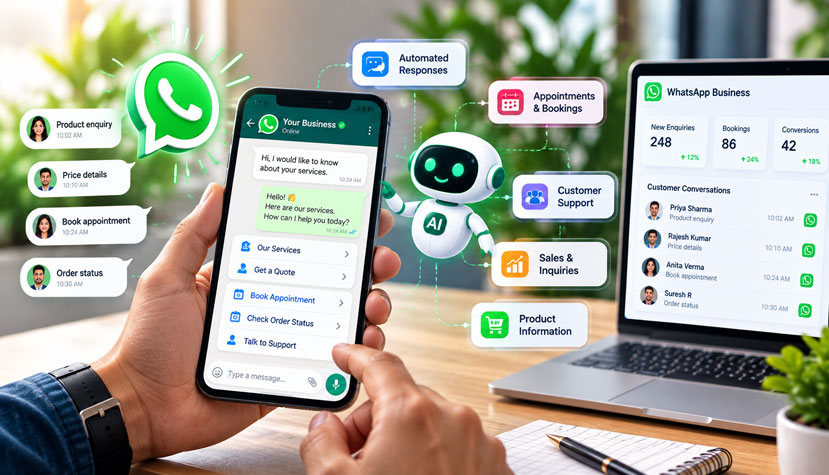
Collect information, check approved availability and initiate booking workflows.
Internal Operations
Assist with repetitive tasks, reporting, information retrieval and coordination.
Why AI Agents Matter in 2026
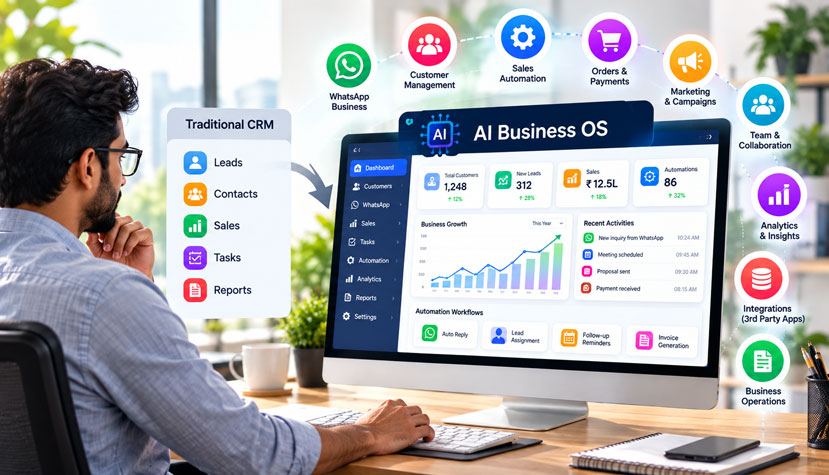
For organizations with repetitive and connected workflows, AI agents can become an additional automation layer between customers, employees and business applications.
Conclusion
Traditional chatbots remain valuable for structured conversations and straightforward support. AI agents extend automation into multi-step, tool-connected workflows. For businesses in 2026, the opportunity is to identify practical processes where AI can safely perform useful work while keeping appropriate human oversight.