- June 25, 2026
- CRM to AI Business OS
- 9 Min Read
From CRM to AI Business OS: How Indian SMEs Can Automate Their Business.
Customer relationship management systems have become an important part of modern business operations. They help teams capture leads, manage contacts, track opportunities and keep customer information organised.
But as businesses add WhatsApp, websites, email, sales tools, appointment systems and other applications, information can become fragmented across multiple platforms. The next step is to connect these systems with AI and workflow automation so the business can respond, act and learn from customer activity through one connected operating layer.
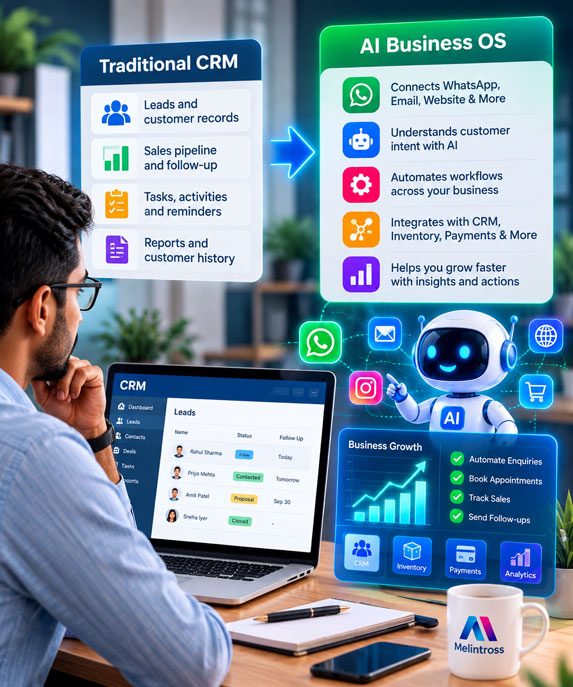
Why Traditional CRM Is No Longer the Whole Picture
A CRM is valuable because it gives a business a structured place to store customer and sales information. However, storing information is different from automatically using that information to move a business process forward.
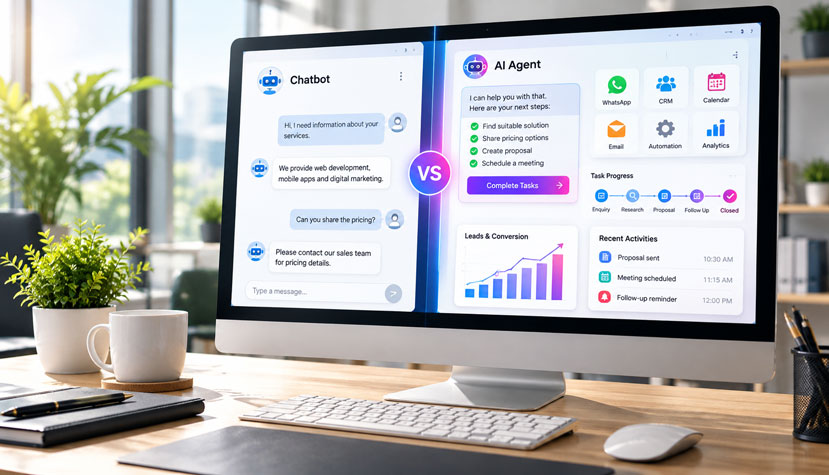
The Shift From System of Record to System of Action
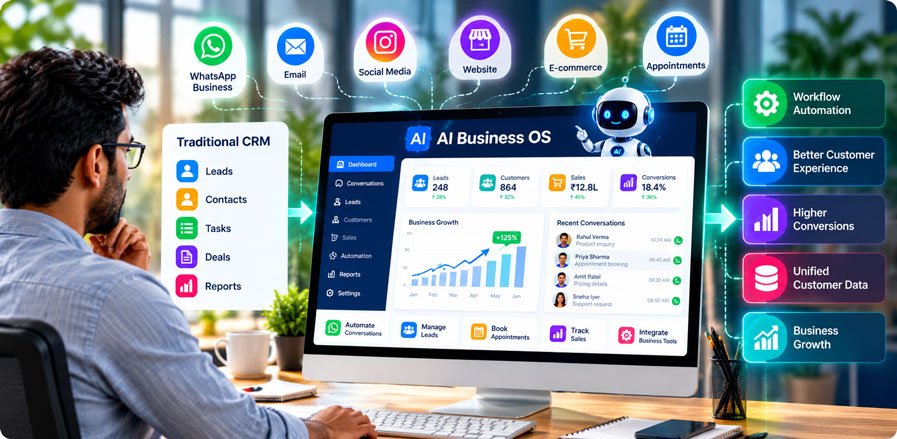
Traditional CRM mainly answers questions such as who the customer is, what the opportunity is and what happened previously. An AI Business OS adds an intelligent action layer that can interpret conversations, trigger workflows, surface relevant information and assist teams with the next step.
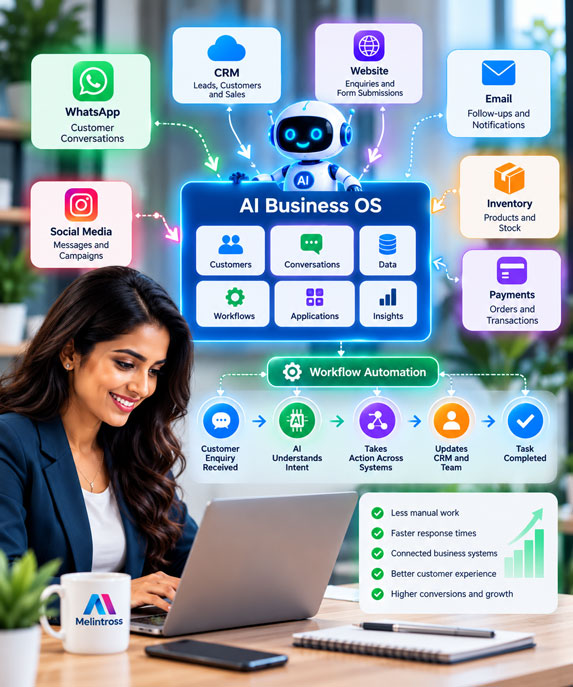
What Makes an AI Business OS Different?
An AI Business OS is not simply another chatbot or another dashboard. It is a connected layer that brings customer data, conversations, workflows and business applications together so that information can move between them with less manual work.
The goal is not to replace every business application. The goal is to connect the applications a business already uses and make the workflow between them more intelligent.
From Customer Conversation to Business Action
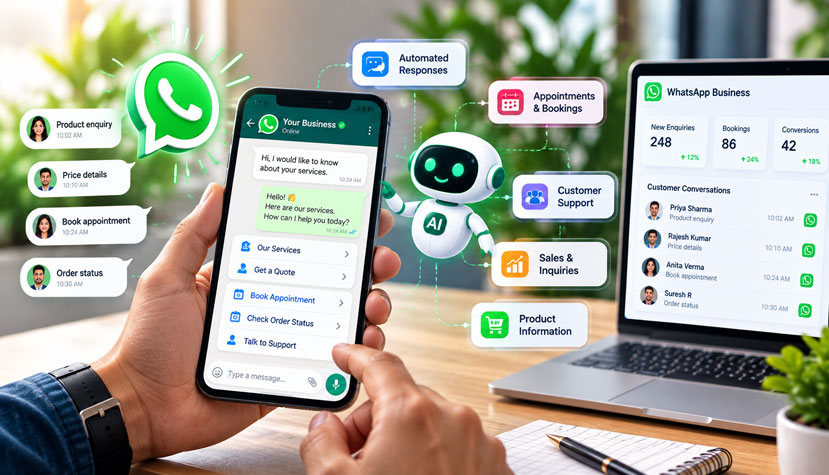
The real value appears when a customer interaction can become a structured business event. For example, a customer can send a WhatsApp enquiry, the AI can understand the request, the CRM can receive the lead and an automated workflow can assign the next task to the appropriate team member.
| Business Layer | What the AI Business OS Can Connect |
|---|---|
| Customer Conversations | WhatsApp, website enquiries, email and other customer touchpoints. |
| CRM | Leads, contacts, opportunities, customer history and follow-ups. |
| Sales | Lead qualification, reminders, quotations and sales activities. |
| Operations | Appointments, service requests, internal tasks and approvals. |
| Analytics | Dashboards, summaries, trends and business performance information. |
| Human Teams | Escalation, approvals and actions that require business judgement. |
Where Indian SMEs Can Apply AI Business Automation
Customer Communication
Respond to routine enquiries, collect requirements and route conversations to the right team.
Lead Management
Capture leads from multiple channels, enrich records and create structured follow-up workflows.
Workflow Automation
Reduce repetitive data entry, notifications, task creation and internal hand-offs.
Business Intelligence
Bring operational information together so owners and managers can see trends and follow-up requirements.
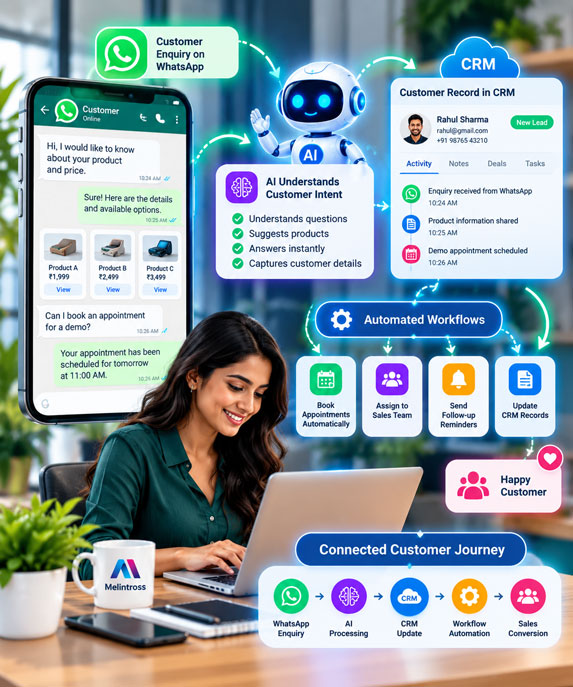
WhatsApp + CRM + AI: One Connected Customer Journey
For many Indian SMEs, WhatsApp is where the conversation begins while the CRM is where the customer record is managed. Connecting the two allows the business to preserve context instead of making employees copy information from one system to another.
How an SME Can Start the Transition
Moving from a traditional CRM environment to an AI Business OS does not require automating everything at once. A practical approach is to start with one repetitive customer or sales workflow and expand after the process is stable.
Step 1 — Map the Process
Identify where enquiries arrive, where data is entered and where teams lose time.
Step 2 — Connect the Systems
Connect the CRM with communication channels and the business tools required for the workflow.
Step 3 — Add AI Carefully
Use AI where understanding, summarisation, classification or recommendations add practical value.
Step 4 — Measure and Improve
Track response time, follow-up completion, workflow errors and customer experience.
Automation Should Support People, Not Remove Control
Not every business decision should be automated. Pricing exceptions, sensitive customer complaints, complex negotiations and other high-impact decisions may still require a person. An effective AI Business OS therefore needs permissions, clear workflow rules, escalation paths and human approval points.
Control
Define what the system can view, change and execute.
Human Review
Escalate decisions that require experience or approval.
Measurement
Monitor outcomes and improve workflows based on real business data.
Conclusion
The move from CRM to an AI Business OS represents a shift from simply storing business information to actively connecting that information with customer conversations, workflows and actions.
For Indian SMEs, the practical opportunity is to connect the tools they already depend on and automate the repetitive steps between them. WhatsApp, CRM, sales, appointments, operations and analytics can become parts of one connected business workflow.
The strongest implementations will start with clear business processes, reliable data, appropriate controls and measurable outcomes—then expand automation as the organisation gains confidence.